How do I get into robotics?
Robotics rewards people who can do both the math of motion and the engineering of real hardware. Unlike AI, the field still runs on a few canonical university courses, and the best of them are free.
Where to start
Start with Russ Tedrake's MIT courses, Underactuated Robotics and Robotic Manipulation, which are complete textbooks with lectures and code; add Stanford's CS223A for kinematics and control, then learn ROS through The Construct or Open Robotics tutorials. For the research frontier, follow Robotics: Science and Systems and the Conference on Robot Learning.
The most watched lectures and talks
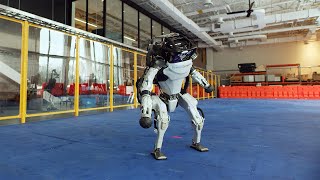


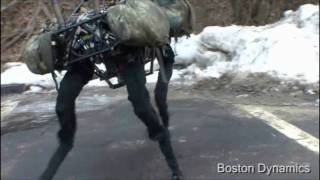


All 342 robotics videos · watch in TV mode
Courses worth your time
| Course | Provider | Format | About |
|---|---|---|---|
| Underactuated Robotics | Russ Tedrake, MIT | Self-study | Open course notes on dynamics and control |
| Robotic Manipulation | Russ Tedrake, MIT | Self-study | Open course notes with Drake notebooks |
| CS223A Introduction to Robotics | Stanford, Oussama Khatib | Online course | Classic lecture series |
| LeRobot | Hugging Face | Self-study | Open library, datasets and low-cost arm builds for robot learning |
| ROS 2 documentation and tutorials | Open Robotics | Self-study | Default robotics middleware |
| QUT Robot Academy | Queensland University of Technology | Self-study | Free short video lessons |
| CS287 Advanced Robotics | UC Berkeley, Pieter Abbeel | Online course | Open lectures |
| Fab Academy | Fab Foundation, MIT Center for Bits and Atoms | Project-based | How to Make (Almost) Anything, distributed across fab labs |
| Self-Driving Cars with Duckietown | ETH Zurich (edX) | Online course | Hardware-based autonomy MOOC |
| The Construct live classes | The Construct | Live course | Weekly live ROS classes |
Programs that take you into the field
| Program | Provider | Format | About |
|---|---|---|---|
| NVIDIA Graduate Fellowship | NVIDIA | Fellowship | PhD fellowship |
| Y Combinator | Y Combinator | Accelerator | Most selective general accelerator; majority of recent batches are AI |
| MSc Robotics, Systems and Control | ETH Zurich | Degree | Legged and aerial robotics labs |
| Michigan Robotics (BSE, MS, PhD) | University of Michigan | Degree | First robotics department at a top-ten engineering school |
| CMU Robotics Institute (PhD, MSR, MRSD) | Carnegie Mellon University | Degree | Largest robotics research institute |
| Robotics Institute Summer Scholars (RISS) | CMU Robotics Institute | Research training | Flagship undergraduate robotics research program |
| Hertz Fellowship | Fannie and John Hertz Foundation | Fellowship | Five-year PhD funding in applied sciences; among the most selective |
| Isaac Lab | NVIDIA | Lab | GPU simulation framework for robot learning |
| MuJoCo | Google DeepMind | Lab | Open physics simulator |
| The Engine (Blueprint and accelerator) | The Engine, built by MIT | Accelerator | Tough-tech venture building with lab infrastructure |
All 156 robotics programs · programs ranked by founder outcomes
Questions people ask before starting
Should I learn ROS first?
Learn the fundamentals (kinematics, dynamics, control) first; ROS is tooling and is fastest to pick up once you have a robot or simulator to point it at.
Which programs lead into robotics companies?
ETH Zurich's Robotics, Systems and Control MSc, Michigan Robotics, CMU's Robotics Institute, and internships at NVIDIA, Boston Dynamics and the national labs are the routes that appear repeatedly among hires.
Can I learn robotics without a robot?
Yes: Tedrake's courses run in simulation, and Isaac Sim, MuJoCo and Gazebo are free; a cheap arm or a quadruped kit comes later.
How this list is made
Frontier Concepts is a curated subset of YouTube and of the public program lists, not a search engine: every video is a lecture, talk, explainer or interview from a listed organization, a company building the field, or a link Hacker News readers kept sharing; courses and programs come from a research pass across four sources, merged and ranked by agreement, format and provider standing. How it is built.